NEWS CENTER
NEWS CENTER
news center
Why Overseas OTT Market Remains a Premium Growth Track Compared with China
There is an interesting consumption difference between Chinese and overseas consumers that most industry players fail to notice.
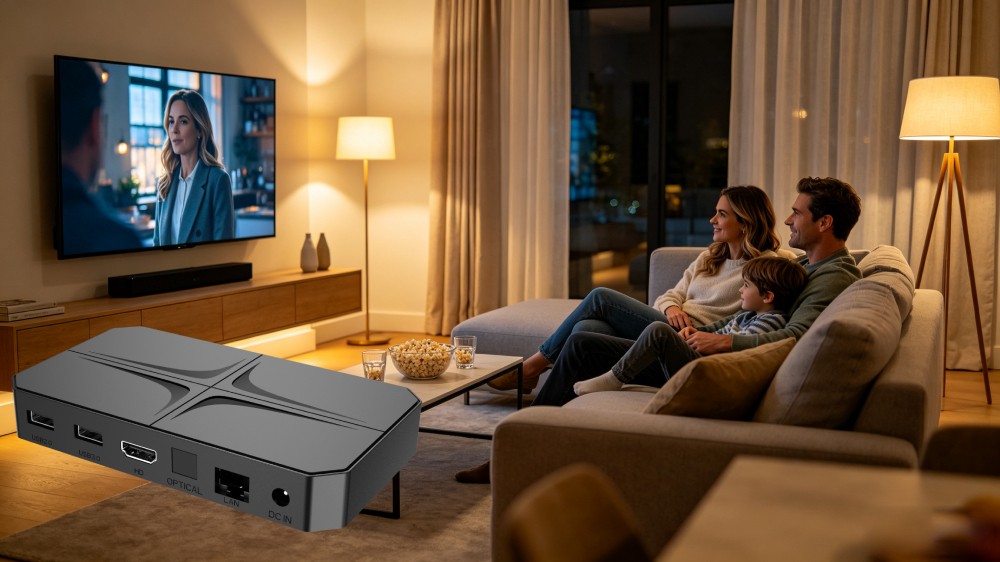
When their TV stutters or cannot play high-definition videos, most Chinese consumers will immediately replace it with a new smart TV. However, overseas consumers, especially those in Europe and America, hold different preferences. As long as the TV screen is intact and the device can power on normally, ordinary households rarely replace the whole television set. Most people opt to spend a small amount of money on an OTT TV Box or TV Stick, which can easily upgrade old TVs into smart large-screen devices.
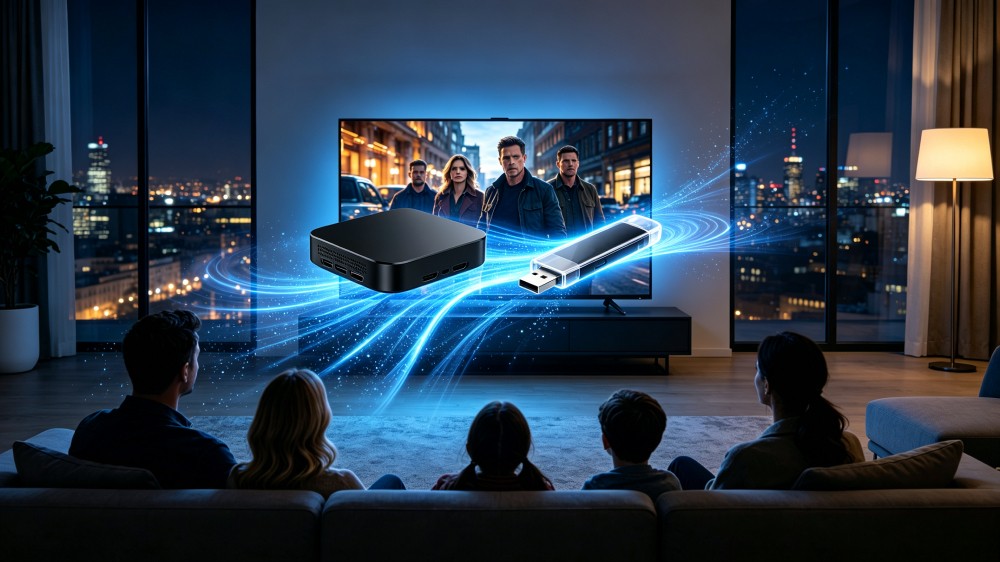
The completely different choices of Chinese and overseas families for TV viewing appear to stem from different consumption habits on the surface, while they are fundamentally determined by three major factors: supply chain costs, regional compliance ecosystems and commercial operation models. Understanding this gap helps clarify the logic of market segmentation: the domestic OTT market once shrank as China’s TV industry shifted toward centralized procurement and compliance, whereas the overseas OTT sector boasts steady long-term growth backed by massive legacy TV hardware and an open streaming environment.
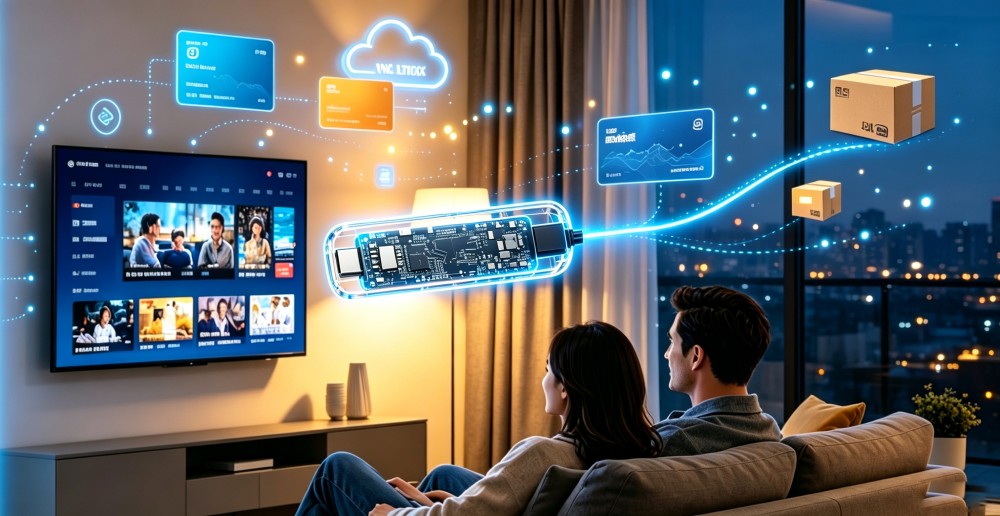
1. Consumer Cost Logic: The Trade-off Between Domestic Hardware Dividends and Hefty Additional Costs
Many people hold a fixed perception that appliance replacement worldwide is low-cost and efficient, just like in China. In fact, affordable smart TVs and accessible replacement services are exclusive benefits brought by China’s mature supply chain, not a universal global standard.
After years of fierce industrial competition and supply chain upgrades, smart TVs have gained widespread popularity in China. At present, a 55-inch 4K smart TV can be purchased for just over 1,000 RMB. Coupled with complete logistics distribution, free on-site installation and trade-in subsidies, replacing the entire TV set becomes the option with the lowest overall cost and optimal viewing experience for Chinese households.
Overseas markets feature more diversified conditions. Although Chinese manufacturers including TCL, Hisense and Xiaomi have expanded globally and greatly lowered the retail prices of smart TVs overseas, the core factor discouraging most European and American families from replacing full TV sets is not the price of the TV itself, but extra expenses incurred by large home appliance delivery and service.
We calculate the total expenditure for average middle-class and lower-income overseas households in the comparison table below:
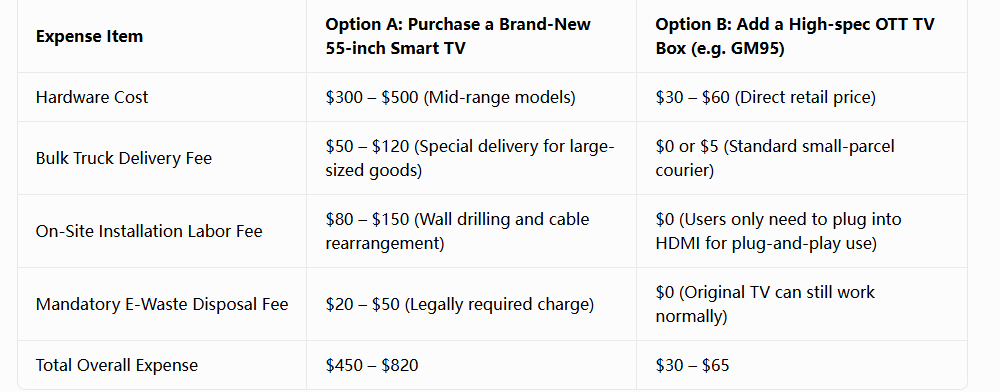
The comparison clearly shows that consumers will bear far higher total costs if they choose full TV replacement with complete supporting services including on-site installation and paid old TV recycling, compared with purchasing OTT streaming devices.
As mainstream global streaming platforms such as Netflix, YouTube and Disney+ keep updating 4K HDR, high frame rate and next-generation audio-visual standards, a huge number of outdated non-smart TVs and early low-spec smart TVs are still in use overseas. These devices lack native hardware support for high-definition decoding, making affordable plug-and-play OTT TV Box and TV Stick the most cost-effective upgrade solution.
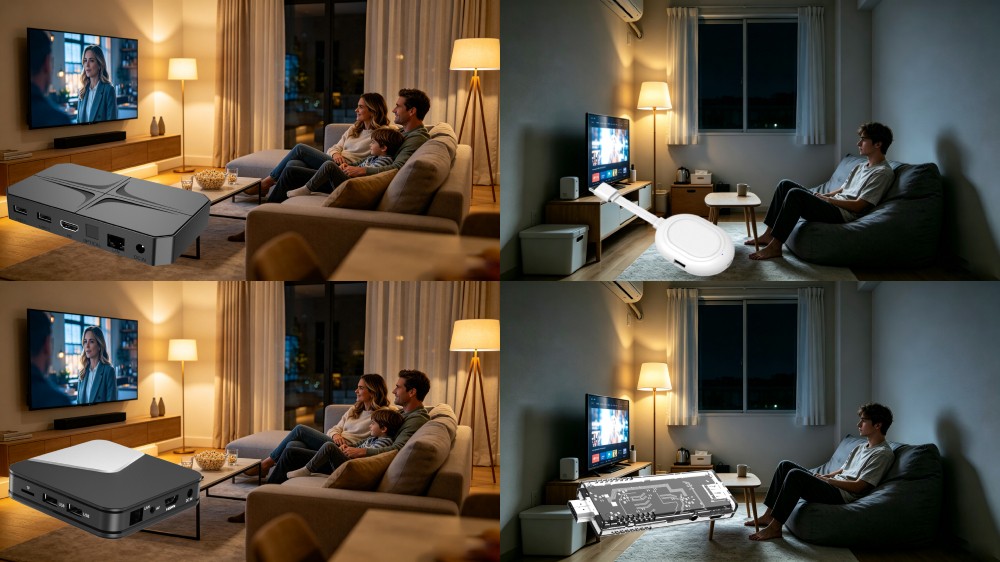
Such differentiated user scenarios have formed two clear types of OTT hardware in overseas markets:
1)OTT TV Box (Standard Set-Top Box): Equipped with full ports including Gigabit Ethernet, USB 3.0 and Wi-Fi 6, these devices deliver powerful performance and stable operation, perfectly matching long-hour daily home streaming and commercial usage scenarios overseas.
2)OTT TV Stick: Lightweight, portable and wiring-free mini hardware that fits well with online retail trends, ideal for renters and flexible multi-scene viewing.
2. Ecosystem Logic: Standardized Compliance Procurement vs Hidden Technical Certification Barriers
The core gap between domestic and overseas OTT lies in industrial supervision, market access rules and the operation mode of content ecosystems.
Domestic Market: From Unregulated Expansion to Simplified Compliance
The domestic OTT terminal market developed freely in the early stage. As integrated smart TVs achieved full market penetration, the growth space of retail streaming boxes continued to shrink. In recent years, the National Radio and Television Administration has launched special campaigns to simplify TV operation interfaces and eliminate deceptive layered subscription fees, bringing profound changes to China’s TV ecosystem. Living room screens, once rejected for complicated operations, are undergoing compliant transformation featuring instant live streaming after startup, simplified systems and no hidden charges. This has triggered a new boom in centralized IPTV set-top box procurement by telecom operators (China Mobile, China Telecom, China Unicom) and compliant terminals for radio and television authorities. Retail OTT boxes are only applied in specific scenarios such as hotels and commercial displays, forming a domestic market pattern dominated by operator bulk orders and supplemented by segmented retail streaming hardware.
Overseas Market: Open Appearance with Strict Compliance & Certification Barriers
By contrast, overseas streaming markets feature a higher degree of marketization without the exclusive integrated broadcast control licenses implemented in China. Each region has independent filing, copyright and data compliance requirements for audio-visual services, while end users can freely install streaming applications and switch content platforms. Diversified regional demands also create opportunities for foreign trade manufacturers to customize OTT TV Box and TV Stick for Europe, the Middle East, Southeast Asia by adjusting products to fit local network conditions, climates and user habits.
Nevertheless, an open market does not mean zero entry thresholds. The overseas OTT industry has set up an inconspicuous yet critical barrier of strict compliance and international certifications.
Regulations covering audio-visual services, data security and copyright have been issued across regions: the EU AVMSD Directive, GDPR data regulations, US FCC supervision, as well as OTT filing systems in India and Singapore all enforce mandatory compliance requirements for streaming terminals. Apart from regional laws, four core qualifications are mandatory for OTT hardware to enter mainstream overseas retail markets: Google Official Android TV Certification, Netflix DRM License, Widevine L1 high-definition digital copyright protection certification and Dolby audio & video patent licensing.
Without these core certifications, streaming applications installed on such devices can only output blurry 480P low-resolution images, and 4K/8K ultra-high-definition streaming will be completely unavailable. Faced with this ecosystem rule, overseas buyers are accelerating the phase-out of unbranded white-label products and concentrating bulk orders on qualified original manufacturers with independent compliant R&D capacity and full international certification access.
3. Monetization Logic: Hardware Supply vs Post-Sales Ecosystem Revenue
Most new industry entrants only focus on profit margins from selling OTT TV Box and TV Stick, ignoring the distinct commercial closed-loop models between domestic and overseas streaming markets.
Domestic OTT revenue mainly comes from centralized hardware procurement, platform membership revenue sharing and large-screen advertising, leading to cutthroat homogeneous competition. In comparison, the overseas Connected TV (CTV) ecosystem boasts a mature revenue system for large-screen advertising with unique market advantages, summarized in three key points:
1)Higher conversion rates and premium advertising prices: Large TV screens deliver stronger visual impact and better user engagement than mobile phones, pushing brand advertisers to pay higher CPM (cost per thousand impressions) premiums for in-stream ads and home screen recommendations.
2)Dual coexisting revenue models: Global streaming platforms have formed mature SVOD (Subscription Video on Demand) and AVOD (Ad-Supported Video on Demand) systems, and massive free user groups support a huge advertising market.
3)Long-term recurring ecosystem revenue: Open operating systems support diverse advertising formats, generating steady long-term post-sales income for overseas distributors, telecom carriers and branded operators who hold user traffic resources.
It should be noted that such recurring advertising revenue is currently monopolized by platform giants including Google, Amazon, Roku and leading local telecom operators. For Chinese export manufacturers, the mainstream profitable business model at present relies on efficient hardware supply plus in-depth integrated OS software & hardware ODM customization for global buyers to gain technical premium profits.

Conclusion: Break Free from Blind Low-Price Competition and Embrace Long-Term Certain Overseas Growth
After analyzing four dimensions including consumer costs, user hardware stock, streaming content iteration and international certification standards, the market differentiation between domestic and overseas OTT industries becomes crystal clear:
Guided by strong national policies, China’s OTT industry is shifting toward strict compliance, centralized bulk procurement and simplified operation systems, with low-quality white-label streaming hardware gradually eliminated from the market.
The overseas market features high overall costs for full TV replacement, massive stock of aging television hardware, continuous upgrades of mainstream global streaming content and rising international certification thresholds, creating stable structural demand for OTT streaming devices.
Therefore, business opportunities in the overseas OTT sector are not short-term traffic dividends based on low prices, but a long-term growth track with high certainty supported by four overlapping advantages: cost gap, massive legacy users, open streaming ecosystem and technical certification barriers.
For original Chinese manufacturers with robust independent R&D strength and full capabilities to obtain international certifications, exporting compliant OTT TV Box, high-performance Android TV Box and portable TV Stick remains a high-quality full-channel incremental overseas business track.