


NEWS CENTER
NEWS CENTER
news center
How to Select Chips for Android TV Boxes: Allwinner VS Amlogic
For overseas Android TV‑box buyers, chip selection often deserves higher priority than appearance, RAM or flash storage.
The chip not only determines device processing performance, but also influences video decoding capability, system solutions, software adaptation, certification paths and overall BOM cost. For OEM/ODM projects, picking the right chip essentially defines your product positioning and mass‑production roadmap.
Among mainstream Android TV‑box solutions for global markets, both Allwinner and Amlogic are viable platforms. Neither is universally “better” — the core question is which platform fits your product requirements.
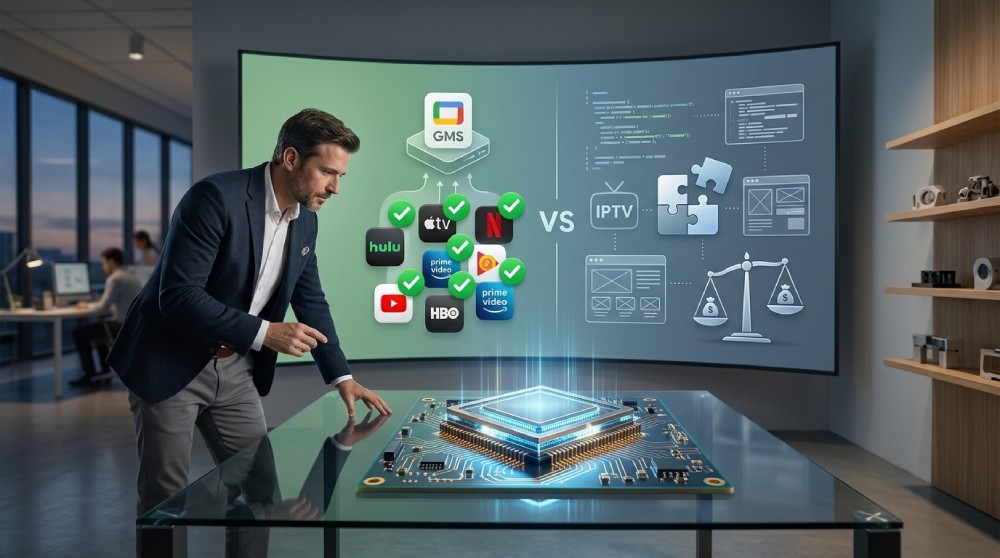
1. Define Product Position First, Rather Than Only Asking for the Lowest Chip Price
Before selecting a chip, buyers should clarify several key questions:
1)Is this product for branded retail or white‑label bulk sales?
2)Are primary use‑cases licensed streaming services, regional IPTV, or general home media playback?
3)Does your project prioritize certifications & ecosystem support, or cost‑effectiveness & customization flexibility?
4)What is your estimated order volume, and how many years will this product remain on sale?
All these factors will shape your final chip decision.
Branded‑retail or licensed‑streaming‑oriented products require heavy focus on DRM, Google‑related services, streaming‑platform certifications and long‑term software maintenance.
For regional IPTV, white‑label hardware or custom projects, priorities shift toward system compatibility, UI/APK customization, BOM cost and stable mass‑delivery capacity.
The correct decision‑making workflow for chip selection should follow:
Market Demand → Sales Channel → Product Positioning → Functional Requirements → Certification Requirements → Chip Solution
Avoid making chip choices before clarifying market and product requirements.
2. Amlogic: Ideal for Projects Focused on Streaming Ecosystem & Brand Operations
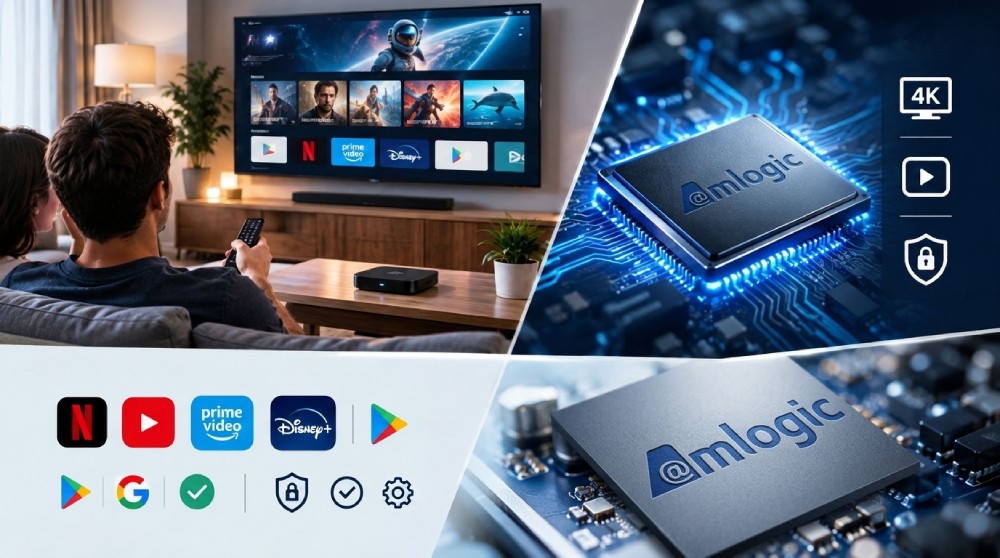
Amlogic has long focused on OTT, IPTV and set‑top‑box segments, with product lines such as S905X4 and S905X5 delivering optimized video processing, display output and security capabilities for varied products.
Amlogic platforms are worth priority evaluation for projects targeting formal branded channels, premium streaming‑service experience and long‑term product operation.
One critical procurement note needs emphasis:
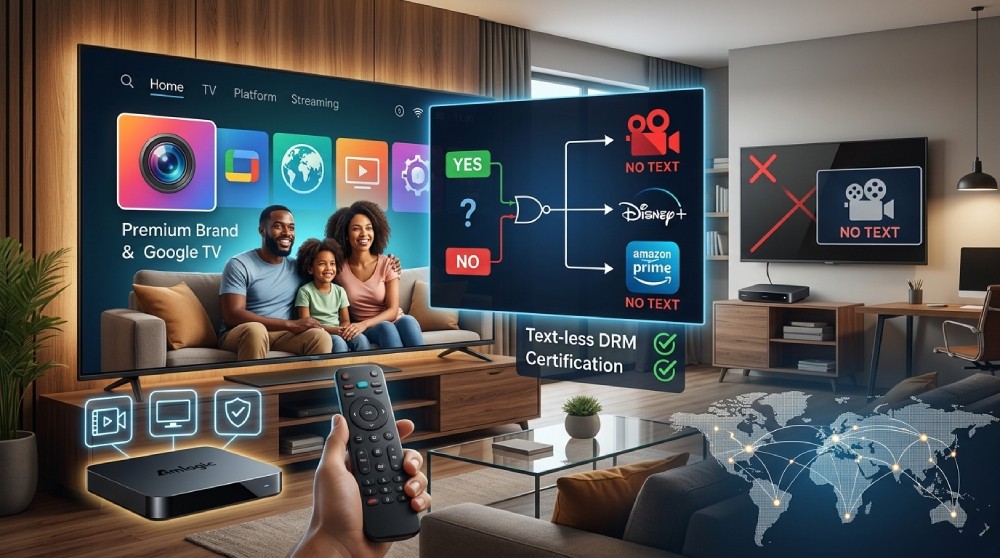
Adopting an Amlogic chip does not automatically grant the whole device Netflix, Google TV or other streaming‑platform certifications.
Actual certification eligibility depends on specific chip sub‑model, OS version, DRM implementation, firmware, complete device solution and relevant licenses.
For instance, not all Amlogic chips satisfy the hardware prerequisites for GMS / Google TV. Entry‑level variants like the S905W2 fail to meet baseline hardware requirements for such certifications.
If your project mandates specific streaming certifications, confirm the full certification solution with your supplier at the early project phase.
3. Allwinner: Suitable for Cost‑focused Projects with High Customization Needs
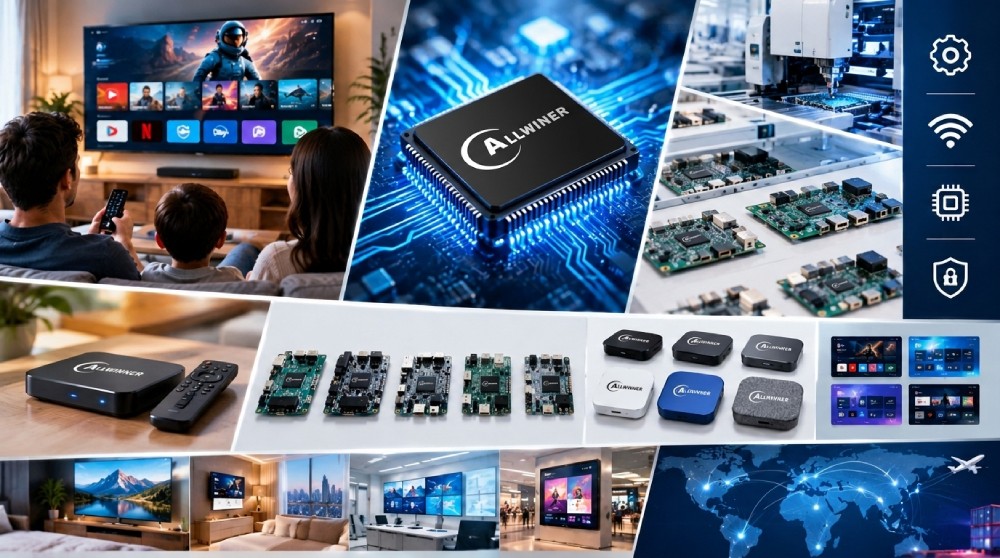
Allwinner also offers mature OTT‑oriented SoCs. Take the H618 as an example: it targets OTT devices and smart display hardware, supports Android OS, 4K@60fps HDMI output and comprehensive video‑decoding specs.
Allwinner solutions strike a solid balance among functionality, cost and customization for regional IPTV, white‑label bulk orders, engineering projects and heavy system‑UI‑customized products.
Note that “cost advantages” do not equal “low‑end‑only performance”.
You need to assess whether your project requires licensed streaming certifications, and whether you are prepared to cover corresponding development & licensing expenses for those ecosystems.
If your core requirements cover regional feature adaptation, system customization, product differentiation and cost control, Allwinner will serve as a reasonable candidate solution.
4. Avoid Simplified Country‑based Chip Decisions for South America & Southeast Asia
This is a commonly overlooked point in overseas hardware procurement.
Within one single country, multiple business models co‑exist: branded retail, cross‑border e‑commerce, regional IPTV, engineering projects and white‑label wholesale.
Instead of generalizing “use Amlogic for Country A and Allwinner for Country B”, evaluate your actual product attributes:
1)Branded retail / licensed streaming products: Prioritize certifications, DRM, ecosystem compatibility and long‑term software maintenance.
2)Regional IPTV products: Prioritize system compatibility, feature adaptation, customization and cost control.
3)White‑label bulk products: Prioritize BOM cost, core functional performance, mass‑production stability and component supply security.
4)Engineering / ODM projects: Beyond chip performance, pay close attention to software customization, development cycles, delivery capacity and after‑launch technical support.
To sum up, chip selection is driven by your product and sales‑channel requirements, not merely geographic labels such as South America or Southeast Asia.
5. Eight Key Questions to Confirm With Your Supplier Before Chip Procurement
1)Target market and sales channels for the end product
2)Mandatory certifications including Netflix, Google TV or GMS
3)Requirements for DRM, CA or operator‑specific certifications
4)Expected customization depth for UI, APK, launcher and system firmware
5)Projected order volume and expected product life‑cycle
6)Long‑term stable supply status for chips, mainboards, firmware and finished devices
7)Local customs & audio‑visual compliance rules in target markets (certain territories restrict retail sales of non‑certified OTT boxes)
8)Audio‑codec licensing status (Dolby, DTS and related authorizations)
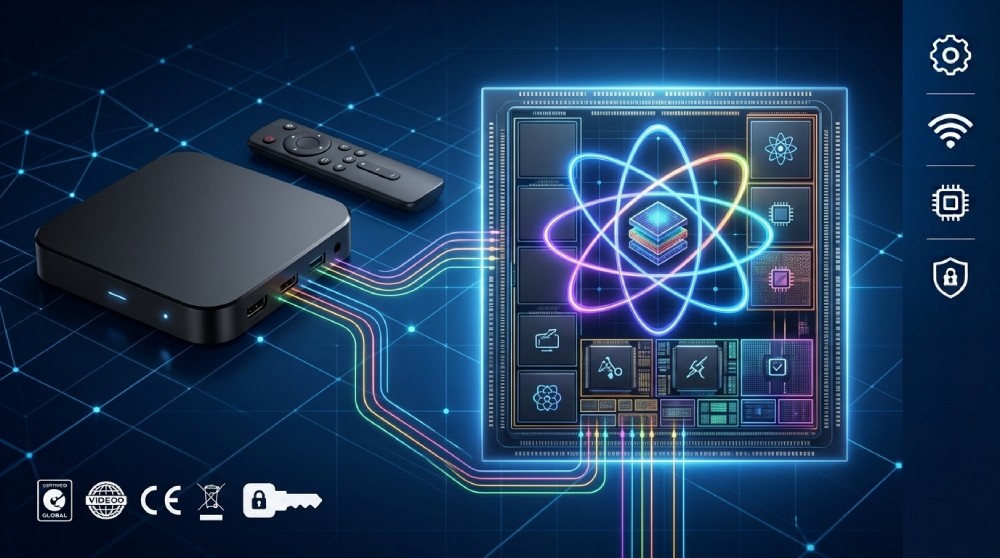
For OEM / ODM projects, the chip is only a starting point. A mature complete solution combines chips, mainboards, memory, storage, Wi‑Fi modules, operating systems, software, mechanical design, certification compliance and reliable mass‑production capability.
About IKWORLD
IKWORLD delivers OEM & ODM smart‑hardware services with in‑house R&D, complete‑device design and mass‑manufacturing competence. Our portfolio covers both Allwinner and Amlogic platforms.
Rather than pushing fixed chips to clients, we match well‑rounded finished‑device solutions according to your target market, product positioning, functional needs, certification constraints and cost budgets.
Smart chip selection is not about picking the most powerful chip — it is about selecting the solution best‑suited for your product.


